Every edit.
Part of a bigger story.
One image.
Many possibilities.
A coherent trajectory.
MTEdit: Packed Trajectories Beat Rollouts
for Multi-Turn Image Editing
High-quality editing trajectories that preserve the details
and carry the conversation forward.
Editing trajectories
Source–target edit pairs
Turns per trajectory
Editing categories
01 / THE COLLECTION
More than a before & after.
Explore how an image evolves. Every sequence reveals a different combination of edits, preserved details, and creative possibilities.
02 / LONGER TRAJECTORIES
Keep going.
Keep the details.
Follow an entire eight-turn editing trajectory. Inspect the source, move through each state, and see how changes accumulate.
MTEdit averages 5.38 turns per trajectory.A small world,
eight considered changes.
A botanical close-up becomes a sequence of cumulative edits. The complete trajectory is available below, from the original photograph to the final state.
Viewing the final state · Turn 8 of 8
03 / CONTEXT-AWARE EDITING
Every turn has a history.
A shared constraint. A reference to an earlier object. A simple “a little brighter.” Three ways an editing conversation carries meaning across turns.
04 / DATA AT A GLANCE
Room to explore.
From portraits and objects to illustrated worlds. Browse the gallery by subject or visible edit; these gallery tags are separate from the dataset’s 23-category taxonomy.
Two editing scenarios. Step-wise and
context-aware.
Four task settings. A shared
resource for multi-turn learning.
05 / BEHIND THE DATA
Think in trajectories.
Generate together.
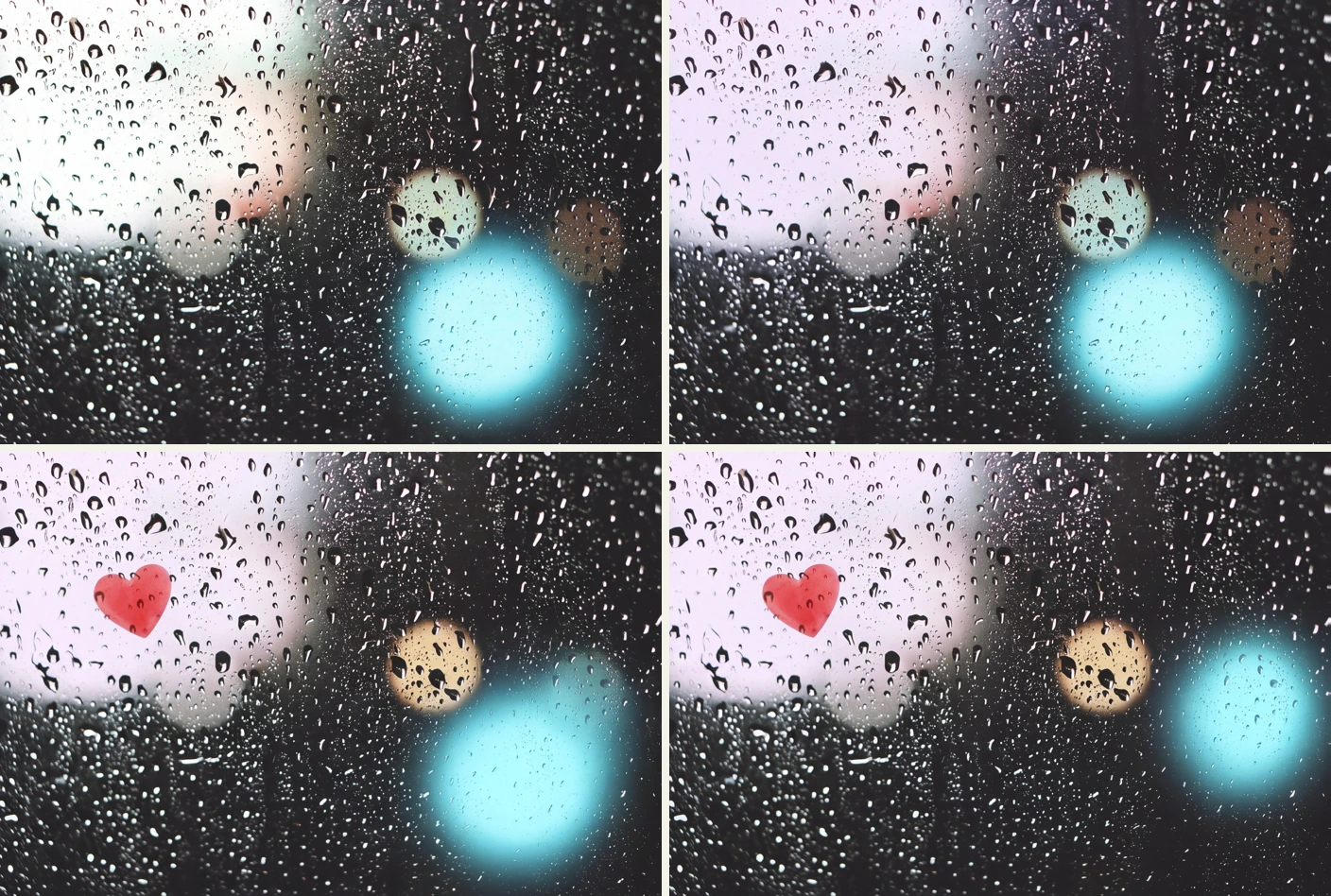
Packed Trajectory Canvas (PTC) generation creates four editing states in a shared visual context. The canvas is filtered, captioned, split, and aligned into training pairs.

Curate
Select high-resolution source images with strong visual quality.
Pack
Generate four editing states together in a 2 × 2 canvas.
Convert
Filter, derive instructions, split panels, and align editing pairs.
The images above show a dataset source and a montage of its first four aligned states. PTC generates four turns per canvas; a second canvas starts from the final state of the first to obtain eight turns.
Look closer: PTC vs. sequential rollout
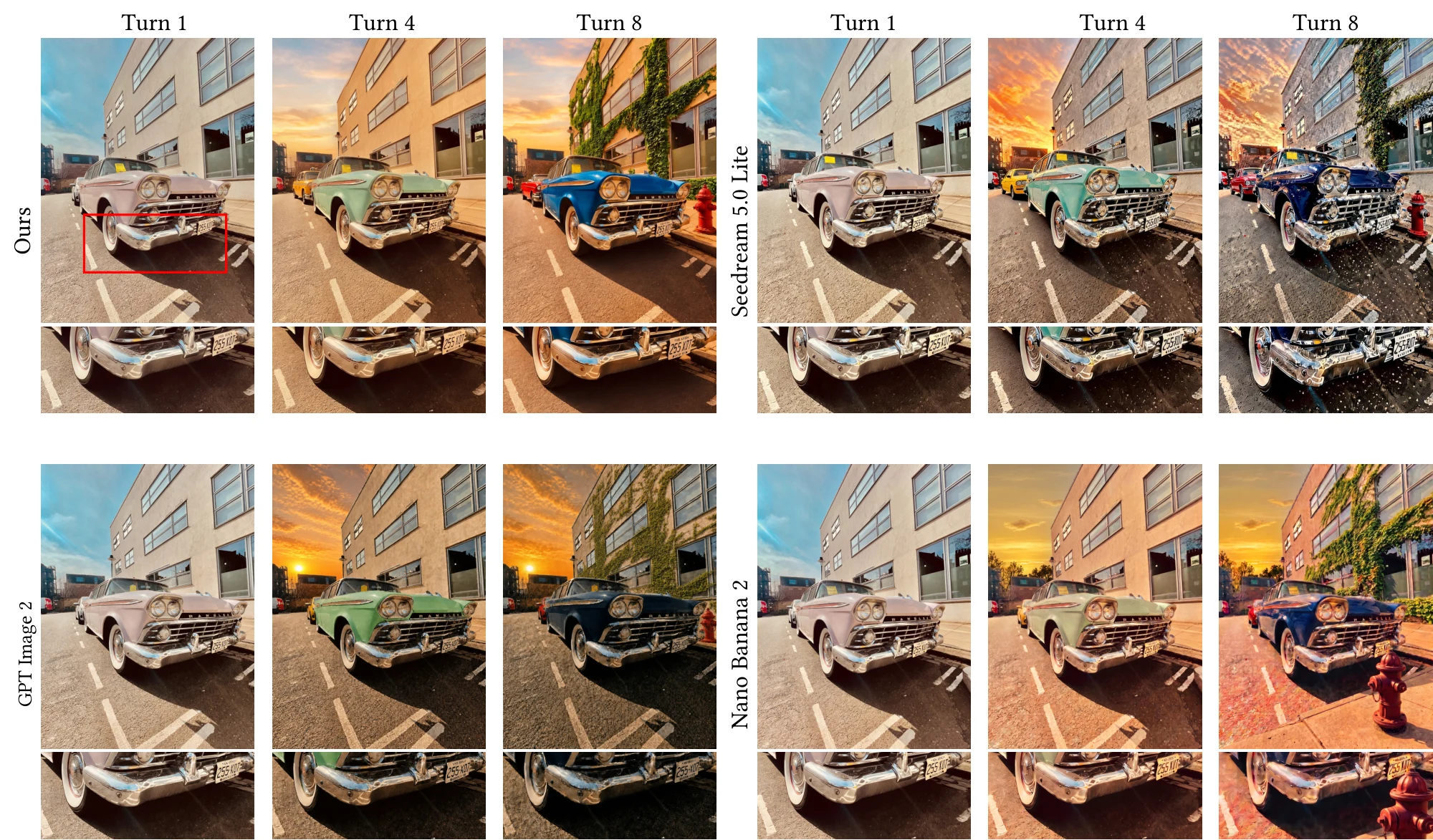
Data-construction comparison from the paper. Across 5,000 shared cases, PTC’s DRS remains between 4.27 and 4.30 over eight turns. DRS measures visual quality; instruction following is evaluated separately.
Limitations: panels can interfere with one another and require filtering. Substantially longer trajectories may still accumulate drift.
06 / FROM DATA TO CAPABILITY
Built to train.
Designed to evaluate.
MTEdit-Bench evaluates instruction following, content consistency, visual-quality stability, and the use of editing history.
Four tasks. A fuller picture.
Benchmark sequences are distinct from the training examples displayed above.
The value of better data
STEP-WISE · TURN 8Qwen-Image-Edit-Causal → Qwen-Image-MTEdit
IF and CC: 0–10. DRS: 0–5. Higher is better. IF/CC are set to zero for subsequent turns after a failure; DRS is not.
07 / TAKE THE NEXT STEP
Make something
with MTEdit.
Explore the examples today. Dataset, training code, and model release links will be added here when available.
Citation
Source images retain their original rights. Release terms for generated edits will follow the applicable source-image and model-provider terms.